Traditional textile manufacturing is facing an environmental tipping point. Responsible for over 20% of global industrial wastewater pollution, standard wet-dyeing methods consume immense volumes of hot water, chemistry, and energy. As global supply chains face mounting regulatory pressure and carbon reduction targets, scaling sustainable textile production with the dye-to-service model offers a commercially viable, clean-tech solution
By shifting from energy-intensive immersion baths to on-demand, precision application, clean-tech pioneers like Alchemie Technology are proving that decarbonising fabric production can happen without sacrificing speed or profitability.
What is the Dye-to-Service Model?
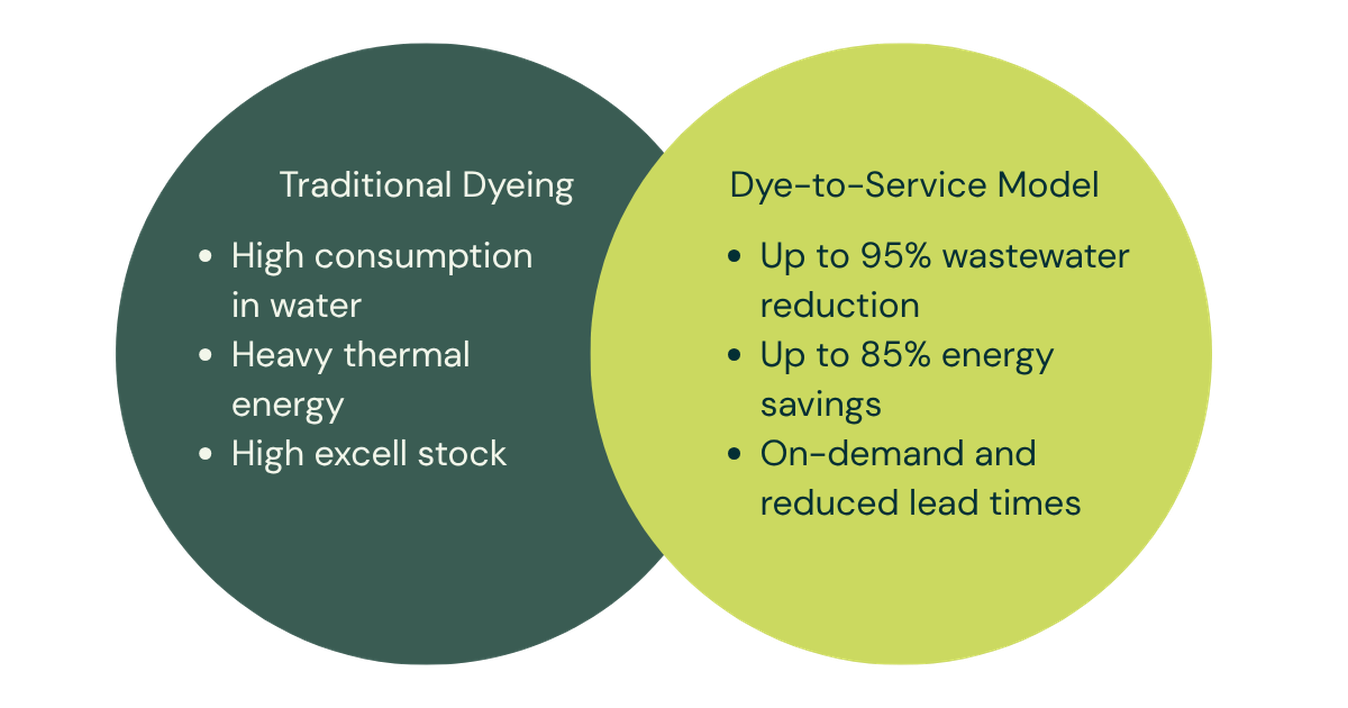
The dye-to-service model replaces traditional dyeing and finishing practices with a digital, production-on-demand service framework. With Dye-to-service, mills can process exact batch sizes only when needed and treat the machines’ specialties as a paid service.
This transition relies on high-precision digital jetting technologies that apply dense nanolitre droplets deep into the textile fibres. Because colour penetrates the substrate without submerging the entire material in a bath, the need for post-dye washing cycles is virtually eliminated, paving the way for scalable, waterless manufacturing.
Watch to understand more about Dye-to-Service:
Cleantech in Sustainable Textile Production
To scale sustainable textile production with the dye-to-service model, modern dyehouses are integrating automated, low-carbon machinery designed to handle both dyeing and finishing processes cleanly.
Sustainable Textile Dyeing with Endeavour™
At the heart of low-carbon color application is Alchemie’s Endeavour™ system. Engineered for industrial-scale woven and knitted fabrics, Endeavour™ combines digital liquid application with in-line drying and fixation.
High-Precision Finishing with Novara™
Sustainable textile production extends beyond colour to essential fabric treatments. Traditional finishing applies functional chemistries (such as moisture-wicking or water repellents) across the entire fabric mass.
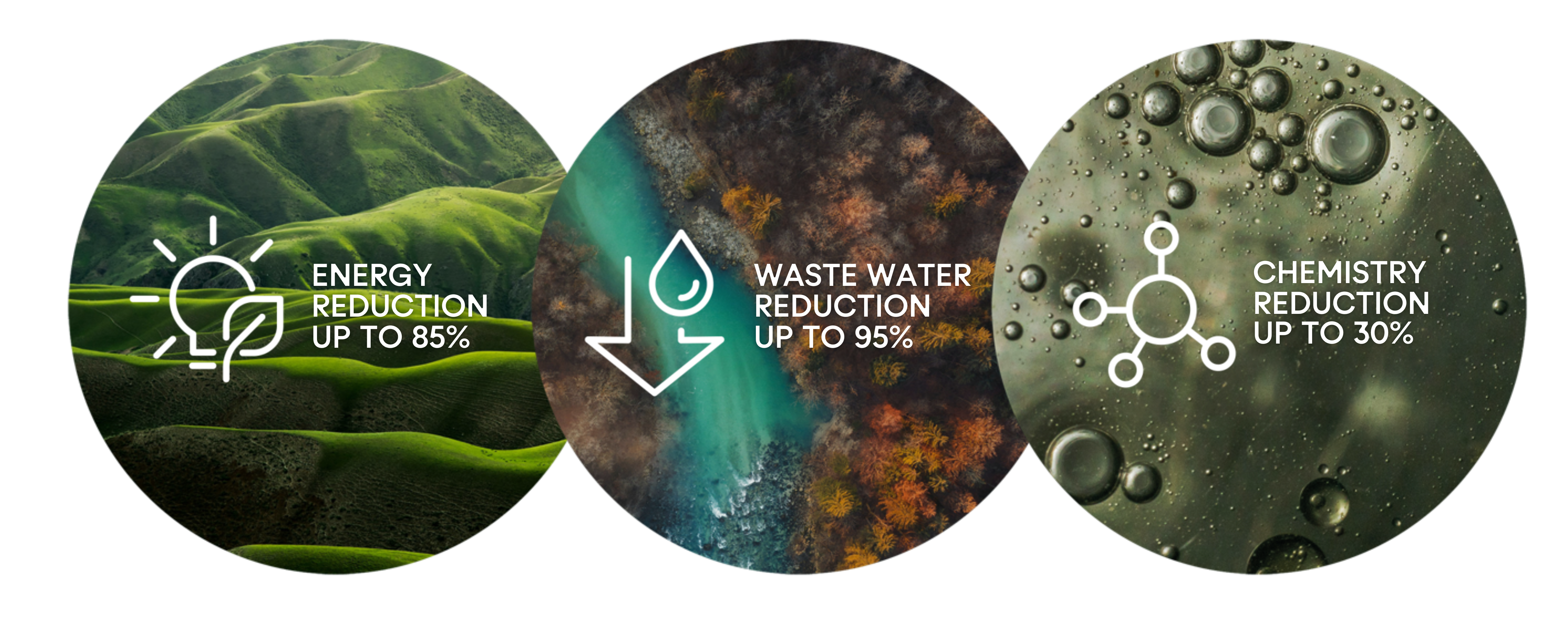
By deploying non-contact application tools like Novara™ digital finishing, mills can apply active chemistry single-sided or double-sided with single-grain precision. This targeted application slashes chemical consumption by up to 85% and significantly reduces drying energy.
Advantages for Manufacturers and Brands
Scaling sustainable textile production with the dye-to-service model delivers clear bottom-line gains alongside environmental benefits:
Digital dyeing and finishing platforms—anchored by systems like Endeavour™ and Novara™, are proving that green textile manufacturing is no longer a niche concept. By adopting on-demand dye-to-service workflows, textile manufacturers can eliminate wastewater, shrink their carbon footprint, and scale their sustainable textile production.
Find out more about Dye-to-Service at enquiries@alchemietechnology.com