The European Union has taken a decisive step that will fundamentally change how the fashion and textile industry operates.
Under new rules adopted as part of the Ecodesign for Sustainable Products Regulation (ESPR), companies will no longer be allowed to destroy unsold clothing and footwear placed on the EU market. For large companies, the ban comes into force from July 2026, with medium-sized businesses following in later years. Alongside the ban, companies will be required to publicly disclose how much unsold stock they discard and why.
This is not a symbolic sustainability gesture. It is a structural intervention that challenges one of the industry’s most deeply embedded practices: overproduction with disposal as a fallback strategy.
The European Commission has been explicit about its intent. Millions of garments are destroyed every year in Europe despite being new and unused, generating unnecessary carbon emissions and resource waste. According to EU estimates cited by the Commission and reported by outlets including ESG Today, Business of Fashion, and the European Commission’s own environment directorate, the destruction of unsold textiles contributes millions of tonnes of avoidable CO₂ emissions annually.
Why this regulation goes beyond retail
Although headlines focus on brands and retailers, the real impact of this ban reaches far upstream, into manufacturing, dyeing, finishing, and production planning.
For decades, excess inventory has been absorbed quietly through markdowns, off-price channels, or outright destruction. That safety valve is now being removed. When unsold products cannot be destroyed, every production decision becomes more exposed: how much was made, how accurately demand was forecast, and how efficiently resources were used in the first place.
This shifts risk backwards through the supply chain. Manufacturers and dyehouses will increasingly be asked not just to produce at scale, but to produce with precision. Overruns, colour inconsistencies, re-dyeing, and rejected batches no longer just create operational inefficiency, they contribute directly to inventory that brands are legally responsible for keeping in circulation.In this new regulatory context, inefficiency becomes a business liability.
A turning point for production models
The ban marks a transition away from volume-led manufacturing towards responsiveness and accuracy. Brands selling into the EU will be under pressure to reduce speculative production and align output more closely with real demand. That, in turn, requires production systems that can operate with smaller batches, faster response times, and tighter quality control.
Traditional dyeing and finishing processes were not designed for this reality. They rely on large batch sizes, heavy resource buffers, and post-process correction to manage variability. These practices increase water use, energy consumption, chemical waste and critically, the risk of producing fabric that does not ultimately sell. As regulation tightens, these inefficiencies are no longer invisible.
What this means for Alchemie and partners
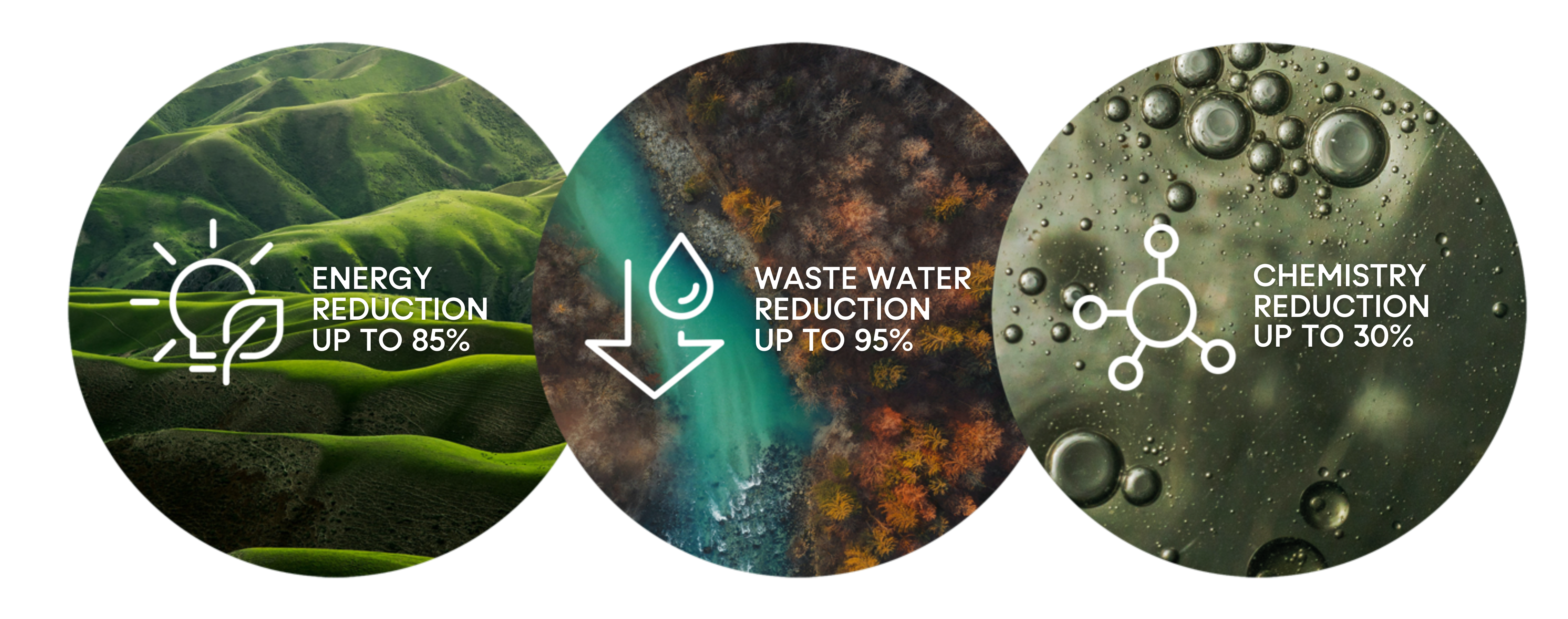
At Alchemie, we see the EU’s decision not as a constraint, but as confirmation of where the industry must go.The future of textile manufacturing will be defined by doing more with less: less water, less energy, fewer chemicals, and less excess production. Precision in dyeing and finishing is no longer just an environmental advantage, it is a commercial necessity.
Alchemie’s technology is built around this principle. By applying colour and functional finishes with extreme accuracy and consistency, production becomes more predictable. When variability is reduced, the need for rework, overproduction, and safety buffers diminishes. That directly lowers the risk of unsold inventory accumulating downstream. In a market where unsold garments can no longer be destroyed, this matters.
 Just as importantly, the ESPR introduces transparency. Companies must disclose how much stock goes unsold and what happens to it. That transparency will inevitably extend into supply chain conversations. Brands will increasingly look to manufacturing partners who can demonstrate control, efficiency, and repeatability not just capacity. Technology choices will become part of risk management.
Regulation as a signal, not an endpoint
The EU ban on destroying unsold clothing and shoes should not be viewed in isolation. It sits alongside other initiatives such as Digital Product Passports, extended producer responsibility, and tighter emissions reporting. Together, they point toward a future where waste is designed out at the production stage, not managed after the fact.
For businesses across the textile value chain, the question is no longer whether change is coming, but how prepared their production systems are to operate under this new reality.
At Alchemie, we design solutions that help production align with these new demands. By improving accuracy, lowering waste, and supporting traceability, manufacturers can produce what is needed, with confidence that every metre of fabric counts. In this regulatory environment, efficiency and precision are not optional, they are the foundation of sustainable and resilient textile production.