Cotton is one of the most widely used fibres in the textile industry, but the way it is dyed remains highly resource-intensive. Traditional processes rely heavily on water, energy, and chemicals, creating both environmental and operational challenges. As the industry looks for more efficient and sustainable solutions, new approaches are emerging that fundamentally rethink how cotton is dyed.
Why Cotton Dyeing Matters
Cotton’s natural properties make it a preferred fibre across apparel and home textiles. Its softness, breathability, and versatility have kept it at the centre of global textile production. However, these same properties, particularly its high absorbency, meaning that dyeing cotton requires significant amounts of water and processing.
As demand for cotton products continues, improving how this fibre is dyed has become a critical focus for manufacturers and brands aiming to reduce environmental impact while maintaining performance and quality.
How Cotton Is Traditionally Dyed
Conventional cotton dyeing relies on wet processing methods, where fabric is immersed in large dye baths. The process typically involves multiple stages, including pre-treatment, dyeing, washing, and finishing. Each step consumes water, energy, and chemicals, making the overall process both complex and resource-intensive.
Among the most common methods, reactive dyeing is widely used due to its ability to form strong chemical bonds with the fibre. Other techniques, such as vat, direct, and sulfur dyeing, are applied depending on the desired colour and performance. While effective, all of these methods share a common challenge: inefficiency. A significant portion of dye does not bind to the fabric and must be washed away, generating wastewater that requires treatment.
The Challenge with Conventional Processes
The reliance on water and chemicals in traditional dyeing creates both environmental and operational pressures. Large volumes of wastewater must be managed, energy consumption remains high, and production cycles can be slow and inflexible.
For manufacturers, this means higher operating costs and dependency on infrastructure. For brands, it presents challenges in meeting sustainability targets and responding quickly to market demands. As regulations tighten and expectations increase, these limitations are becoming more difficult to sustain.
A Shift Towards Digital Textile Dyeing
To address these challenges, the industry is beginning to explore alternative technologies that move away from immersion-based processes. Digital textile dyeing offers a fundamentally different approach by applying colour precisely where it is needed, rather than saturating the entire fabric.
This shift enables greater control over the dyeing process, reducing excess resource use while improving consistency and efficiency. By minimising unnecessary steps and inputs, digital technologies open the door to a more streamlined and flexible production model.
Reimagining Cotton Dyeing with Endeavour™
Through a partnership with Acatel, a leader in sustainable textile manufacturing, Alchemie Technology advances the application of digital dyeing for cotton knit fabrics. As part of a dedicated R&D programme within the Acatel Innovation Hub, this collaboration is focused on preparing the technology for large-scale production. By combining industrial expertise with next-generation dyeing innovation, the project highlights how digital, non-contact processes can replace conventional methods while improving efficiency, consistency, and environmental performance in real manufacturing environments.
Alchemie Technology’s Endeavour™ brings this digital approach into industrial-scale cotton dyeing. Using a fully electric, non-contact system, it applies precisely controlled 10-micron droplets directly onto the fabric, ensuring deep penetration without the need for traditional dye baths.
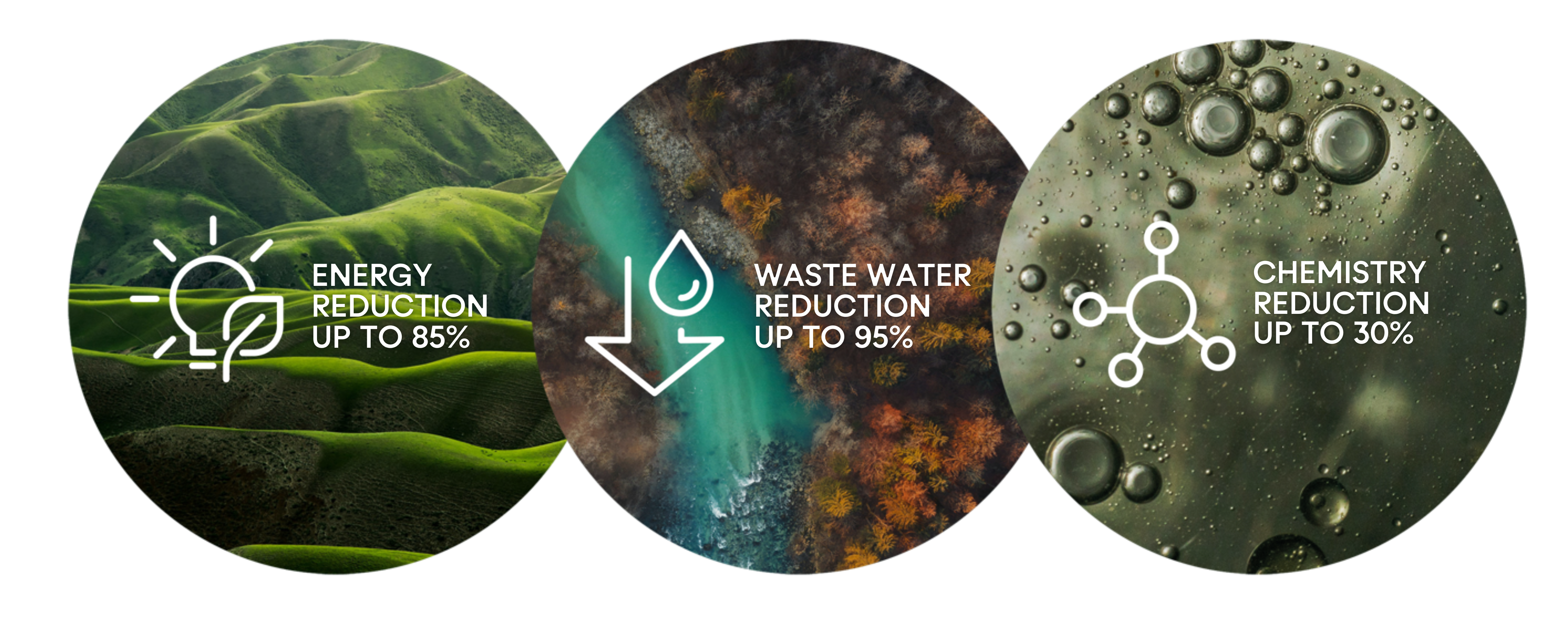
This method significantly reduces resource consumption. Water usage can be reduced by up to 95%, energy consumption by up to 85%, and chemical use is lowered by applying dye only where it is needed. At the same time, Endeavour™ maintains high standards of colour consistency and fastness, ensuring performance is not compromised.
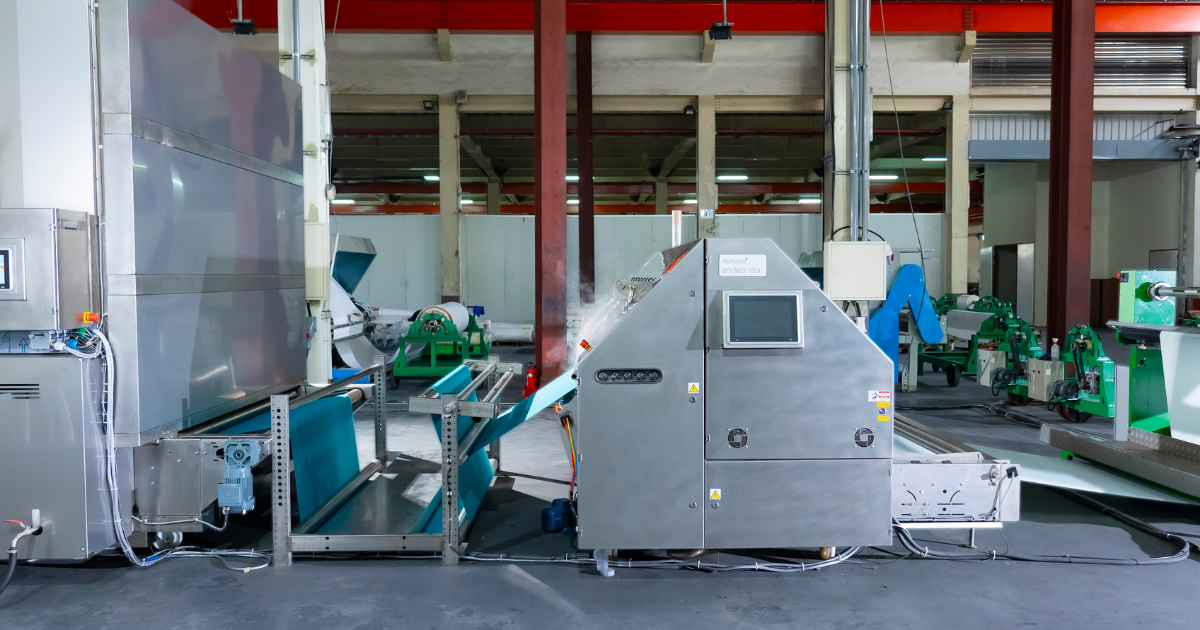
By eliminating wastewater and simplifying the dyeing process, Endeavour™ offers a more efficient and scalable way to dye cotton. It represents a shift from conventional wet processing to a precise, digital system—helping manufacturers reduce costs, improve flexibility, and move towards more sustainable production.
To shift towards water-efficient and sustainable production models, contact us at enquiries@alchemietechnology.com